
McLaren 765LT: what the Longtail leaves behind
The 765LT takes the familiar McLaren shape and gets more serious about weight, gearing and the way air moves around it.
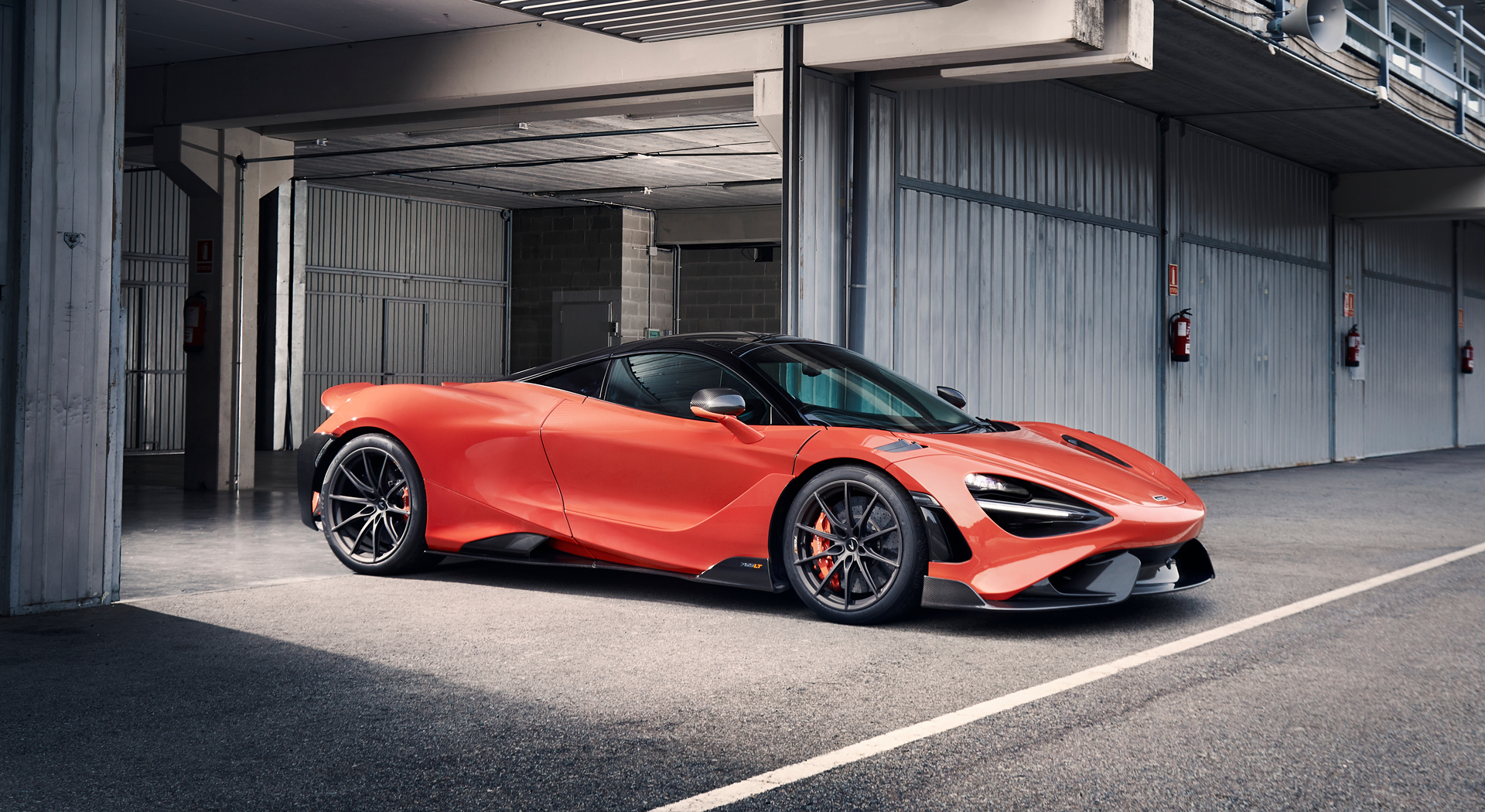
The number on the back is 765, but its U.S. power figure is 755 HP. McLaren names the car for its metric output. The 4.0 liter twin turbo V8 also produces 590 lb ft, driving the rear wheels through a seven speed gearbox with a short final drive.
Lightness is a big part of the Longtail approach. Carbon fiber panels and a four outlet titanium exhaust help reduce weight. McLaren lists 2,709 pounds at the lightest dry specification and 2,952 pounds as DIN curb weight. Those are two different measurements, so they should not be treated as interchangeable.
The result is a claimed 2.8 seconds to 62 MPH, 7.2 seconds to 124 MPH and a 205 MPH maximum. The rear aero is active, and the low bodywork gives air plenty of routes around the car. You can see why a close look from the side is more useful than simply reading the badge.
Use the blue model to look at the lower nose, side openings and rear exhaust area. Rotate slowly enough to see where one surface ends and another begins. If the full car feels too small, zoom in on one corner, then pull back before rotating again. There is a lot of detail packed into a shape that looks simple from a distance.
LOOK AT THE LONGTAIL CHANGES
Photograph: McLaren. 765LT model and cover: Zain Jafar, CC BY 4.0.